
Example Structure: IT Organisation (Measure)
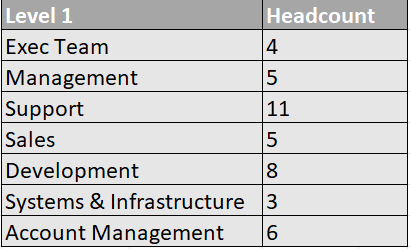
Below is an example of how a multi-level group structure might look for a IT organisation. Clients on the Measure package will only see Level 1 groupings.
Example Structure: Retail Organisation (Improve & Elevate Clients)
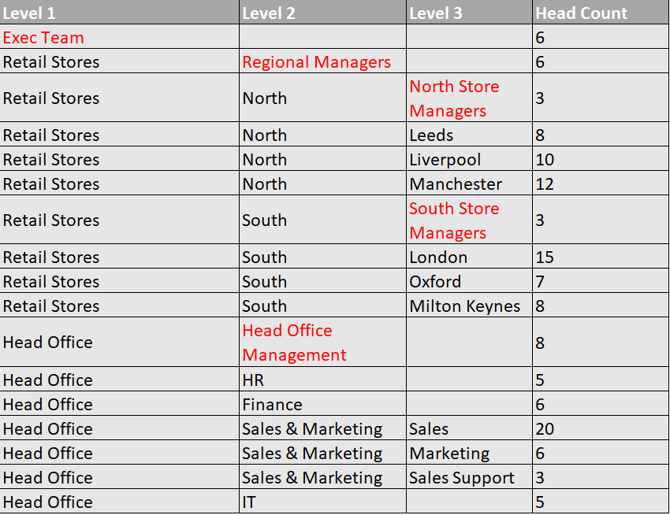
Below is an example of how a multi-level group structure might look for a retail organisation. We have moved managers to sit in their own groups, which are highlighted in red.
We have broken the structure out into an organisational chart below, which gives an indication of the data packs that will be generated for each group.
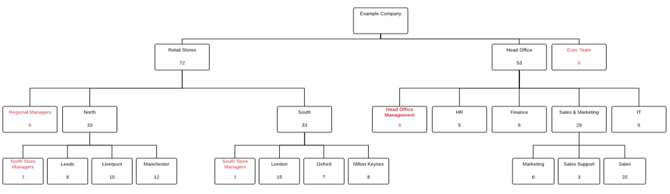
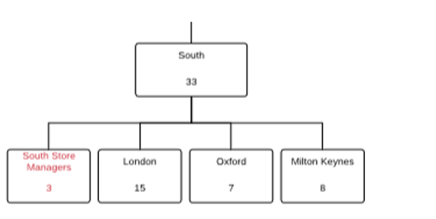
We can generate data packs for any groups with more than 5 responses - groups with a headcount lower than 5 will not receive a pack, however they will roll up into the pack for their parent group where applicable. For example South Store Managers won't get a data pack, but their data will be included in the South data pack.
✅ Recommendation: Share your proposed final structure with a senior leader or Director for sign-off before uploading. This helps ensure alignment and reduces the likelihood of questions later.
Why Separating Managers Matters
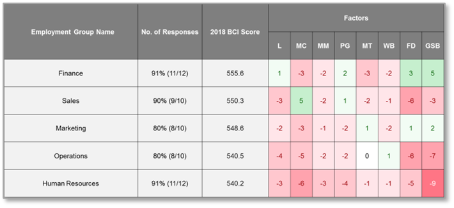
In the example above, you’ll notice managers are separated from their teams. This is best practice and significantly improves the clarity of your reporting. The examples below show the impact on the “My Manager” Scores:
Managers included in their teams
Managers separated into a management group
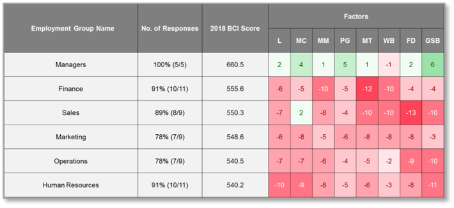
Notice how separating managers results in a clearer understanding of how employees feel about their managers, especially in the "My Manager" (MM) question set.
⚠️ Note: Removing managers from their teams could reduce headcount below the 5-response threshold, meaning some data may not be reported.
For additional support please email support@b.co.uk, call us on 01978 856222, or click the 'Get in Touch' button at the top of this page.